A guest post from Kashanna Hector-Lebby MAFM, RHIA, ODS-C, CPC
Summary of “Navigating Your Career in the Cancer Registry”
Kashanna Hector-Lebby, the owner of Healthcare Education Leadership Prep, LLC, discusses career options in the cancer registry field. The primary settings for ODS specialists include hospital-based and population-based registries. ODS specialists at hospital-based registries perform tasks such as case finding, abstracting, attending cancer conferences, and follow up. On the other hand, ODS specialists at central registries also perform case consolidation, death clearance, and quality assurance. The main goals for these settings differ, with hospital-based registries focusing on patient care and central registries focusing on cancer surveillance. Core skills for ODS specialists include playing a critical role in cancer surveillance, research, and patient care.
Career Map for an Oncology Data Specialist
To become an ODS specialist, individuals need to acquire core skills such as communication, human anatomy, medical terminology, computer skills, time management, organization, critical thinking, analytical skills, attention to detail, and a commitment to continuous learning. The career path is outlined into three phases.
In the first two years, focus on gaining necessary skills, education, and practical experience. Seek mentors, network, and consider certification as a Cancer Conference Coordinator or Case Finder.
During years 3-5, individuals establish their personal brand, mentor others, and engage in networking and professional development activities. Opportunities may arise for roles such as lead abstractor or department supervisor.
Beyond 5 years, ODS specialists have the chance to make significant contributions to the profession through presentations, publications, and research. With extensive experience, they can pursue roles such as Cancer Registry Managers or Program Administrators. Additionally, they have more flexibility in choosing job settings and opportunities for independent contracting.
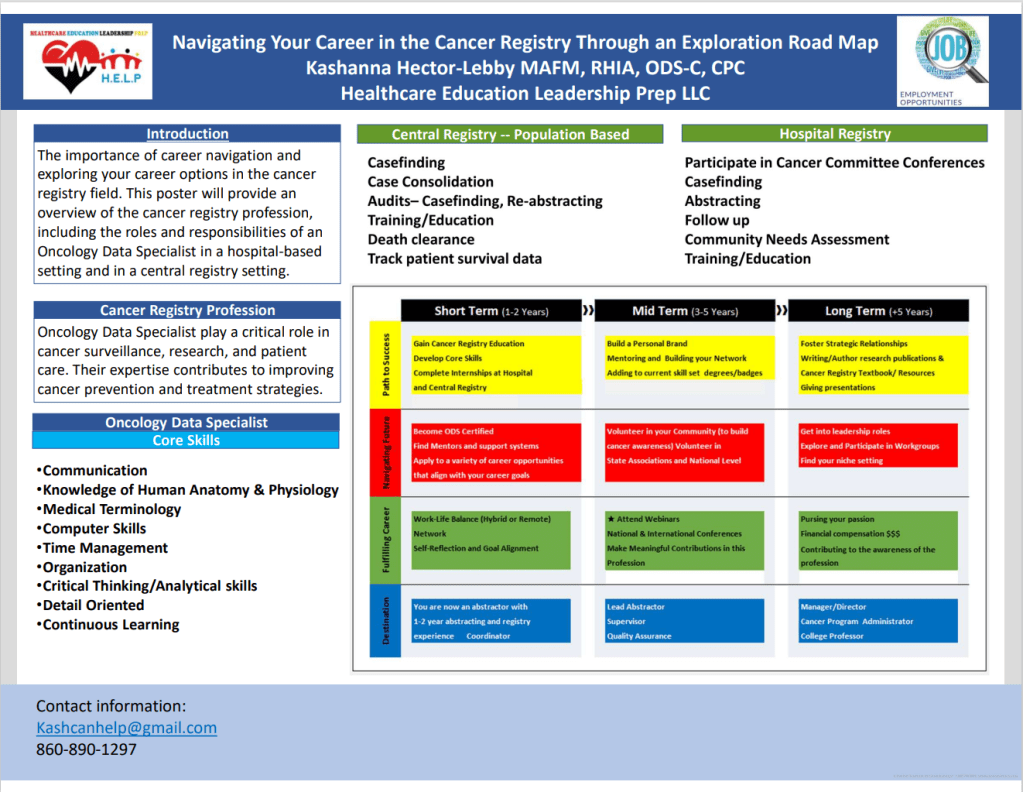
With 5 years of experience, you gain more control over job choices, having explored various cancer registry management settings. Individuals with 5+ years of experience can hold roles like Cancer Registry Managers, Cancer Program Administrators, and Education.





 News & Resources for Oncology Data Specialists
Leave a comment